
Gabriele Cosentino

Media, Culture & Global Politics

Tag: disinformation

  • The Debate on the Origins of Covid-19: A Geopolitical Perspective

    The Debate on the Origins of Covid-19: A Geopolitical Perspective

    Chinatopix, via Associated Press

    Originally published in The Palgrave Handbook of Contemporary Geopolitics (2024)

    The chapter offers an overview of the debate on the origins of the Covid-19 in Wuhan, China, with a special emphasis on its political and geopolitical implications. The debate currently consists of two main hypotheses, the zoonotic natural origin and the lab accident pathway, none of which has found conclusive evidence.

    Through an account of the various stages underwent by the debate over the past 4 years, the chapter sheds light on the contextual political elements – both in the United States and in China – that have influenced the scientific and public discussion on the origin of the pandemic.

    The chapter also discusses efforts of scientists and public health officials in the United States to sideline the lab accident hypothesis and to influence the media to amplify the natural origin. Such efforts are presented as related to an attempt to obfuscate the significant US funding received by a research facility in Wuhan, which is at the center of the lab accident hypothesis.

    Lastly, the chapter also discusses the alleged involvement of both Chinese and American military and security apparatuses in coronavirus research and anticipates that a further discussion of this particular aspect of the debate might lead to a worsening in the US-China relation

    Download full chapter here:
  • From Pizzagate to the Great Replacement: The Globalization of Conspiracy Theories

    From Pizzagate to the Great Replacement: The Globalization of Conspiracy Theories


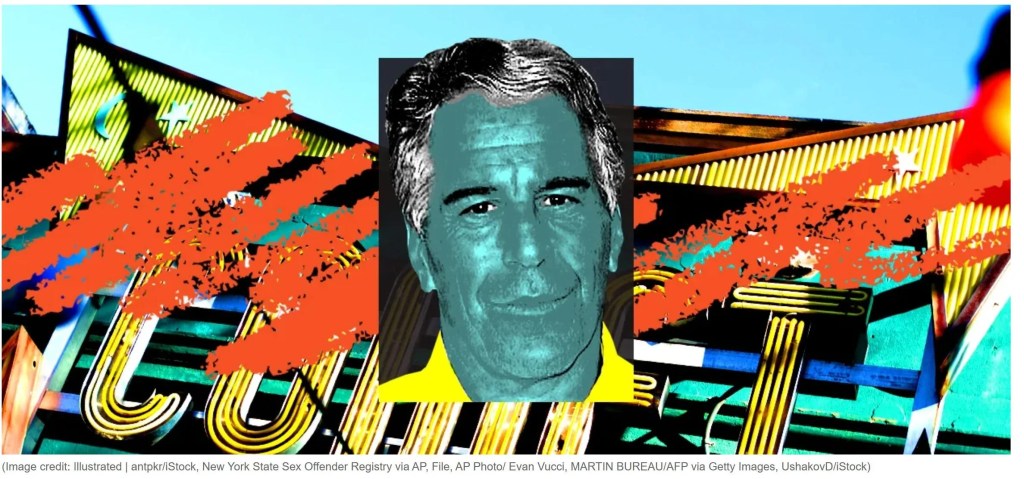
    (Image credit: Illustrated | antpk/iStock, New York State Sex Offender Registry via AP, File, AP Photo/ Evan Vucci, MARTIN BUREAU/AFP via Getty Images, UshakovD/iStock)

    This chapter from my monograph Social Media and The Post-Truth World Order discusses the global circulation of conspiracy theories, with a special emphasis on fictional political narratives originating from Internet message boards and discussion forums.

    Specifically, the focus of the analysis is on conspiracy theories alleging plots by global liberal elites or progressive movements, popular among White supremacists and far-right circles. The chapter attempts to trace a profile of the most popular conspiracy theories currently dominating the discourse among users of fringe spaces of the Internet, especially 4chan, 8chan and Reddit.

    Such on-line conversations, often cloaked in ironic language, emerge from a subcultural milieu that has been conducive to acts of on-line harassment as well as of violence and terrorism. The 2016 Pizzagate conspiracy theory is presented as the blueprint for fictional political narratives growing out of the contributions of multiple authors in various world regions. 

    The QAnon conspiracy theory, an offshoot of Pizzagate, is also presented as an open-ended collective narrative based on paranoid attitudes toward political institutions and establishments, typical of the current era of Internet driven populism and radical politics. The chapter also discusses how the conspiracy theories under examination functioned as outlets for the collective elaboration of unaddressed political scandals.

    In the second part of the chapter, the ‘Great Replacement’ conspiracy theory is discussed as a narrative of victimization of people of White ethnicity, serving as an ideological framework for a growing wave of violent actions by White nationalists worldwide.

    The on-line communications of White terrorists are brought under examination as they crystallize many aesthetic, cultural and ideological elements common to other on-line subcultures and movements mobilizing around claims of marginalization and dispossession. Memes and other elements of Internet popular culture are discussed as ideologically charged resources of on-line culture wars. Reference to post-truth theory is offered throughout the chapter to place the discussion of on-line conspiracy theories within the broader conceptual framework presented in the book’s introduction.

    Full chapter: