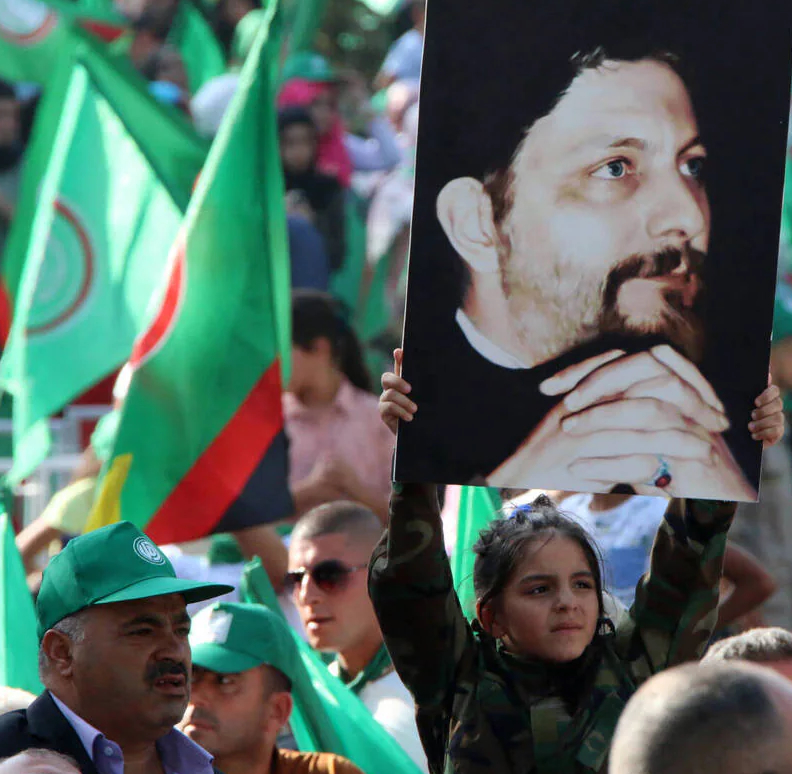
The Imam Musa al-Sadr, a charismatic leader of the Lebanese Shia, disappeared with two companions during a visit to Gaddafi’s Libya in 1978. New findings might help to finally shed light on a fifty-year-old mystery.
On August 25th, 1978, the Imam Musa al-Sadr, a revered and charismatic leader of the Lebanese Shia community, travelled to Libya with two close associates to meet Colonel Ghaddafi. The Libyan leader had invited the Imam to visit him as the country was preparing to celebrate the 9th anniversary of the coup d’etat by a group of Nasserist Free Officers that had overthrown King Idris. However, the Lebanese delegation – the Imam was accompanied by another cleric, Sheik Yacoub, and by his political and media advisor, the journalist Abbas Badreddine – was not traveling to cheer the Libyan revolution and the achievements of its leader, the fiery and erratic Gaddafi. They were trying to dissuade him from further supplying weapons to the guerrillas involved in the bloody civil war that had erupted in Lebanon three years prior.
Before their departure, the mood in the circles close to the Imam was foreboding. He had decided to travel despite the advice to the contrary by many friends and family, worried about the fraught relations between Gaddafi and Musa al-Sadr. The two had met before once in Lebanon, and their meeting had not been amicable. In speeches and statements Gaddafi had openly criticized the Imam. The main issue pitting one against the other was indeed the Lebanese Civil War: the Imam had been actively advocating for interethnic and religious cooperation to overcome the sectarian divisions that had sparked the war. Gaddafi had been generously funding the Palestinian guerrillas involved in the fighting with Christian militias and Israel. As such, he was accused of being one of the main sponsors behind the civil war.
The Iran-born Musa al-Sadr, descendant of a Lebanese family who had moved to Iran during the Ottoman rule, was a highly popular figure in Lebanon, especially among its Shiite minority. After studying in Iran, he moved to Lebanon in 1959 where he established himself as a leading spiritual and political leader, dedicating most of his work to help the impoverished Shia population. In 1969 he was appointed leader of the Supreme Islamic Shia Council, helping the Shias of Lebanon – primarily located in the Southern and Eastern parts of the country – to become a self-reliant and politically active group, overcoming a long history of dispossession and marginalization. In 1974 the Imam founded the Movement of the Deprived, to further assist the Shiite minority while also promoting equality and social justice within Lebanese society across sectarian lines. The movement later evolved into Amal, a party and militia representing the Shiites, who played a key role in the civil war, and which to this day is one of the most important political parties in Lebanon.
When in April 1975 the Lebanese Civil War broke out, al-Sadr tirelessly advocated for the cessation of hostilities, leading anti-war marches, going into hunger-strike, and participating in sit-ins. As the country descended into chaos and Israel got involved, exchanging fire with Palestinian militants that had settled in South Lebanon, al-Sadr helped organize armed resistance among the Shiites, despite his commitment to peace and diplomacy. While the Imam was deeply sympathetic with the Palestinian cause, and on multiple occasions had presented a strong anti-Israel stance, he was also critical of the leadership of the Palestinian Liberation Organization, arguing that its attacks on Israel were causing heavy retaliation on the defenseless Shia population in the South.
When Israel invaded Southern Lebanon in 1978 to push Palestinians away from its border, Musa al-Sadr began traveling across the Arab countries to rally support for the plight of the southern Lebanese Shia who were impacted by the war and by the Israeli invasion. His fateful trip to Gaddafi’s Libya was a crucial part of this attempt to muster regional support for ending the fighting in Lebanon. The Imam’s disappearance dashed the hope of finding a peaceful solution to the Lebanese civil war, which was to continue until 1990, leading to tens of thousands of civilian casualties in internecine guerrilla warfare, to the devastation of large swaths of Beirut and of the country by Israeli incursions and shelling, and to the radicalization of the Shia community, which later espoused the more hardline Islamist position embodied by Hezbollah and endorsed by Iran.
As a religious leader, Musa al-Sadr was seen by many as an unorthodox, even iconoclastic figure, breaking traditional barriers among religions and sects. The Imam wasn’t against religious sects or denominations per se and was appreciative of the diversity of Lebanon’s religious profile. What he opposed was sectarianism, or the entrenching of religious differences into social and political life, which in his view was at the roots of strife and inequality. Famously, the Imam delivered a sermon in a Christian church in Beirut donning the traditional attire of a Muslim cleric -a hitherto unprecedented move by a member of the Islamic clergy – in which he warned of the dangers of sectarianism. However, his unconventional approach to religion and his moderate political stance didn’t sit well with everyone. He irked more traditional clerics, and his political action was seen with suspicion among Shia elites, hardline Arab nationalists and more radical supporters of the Palestinian cause. Gaddafi, styling himself as leader and ideologue of a unique brand of Islamic-nationalism, was also opposed to the Imam’s call for interethnic and inter-religious dialogue.
Musa al-Sadr’s visit to Libya didn’t start well. He was left waiting for days as Gaddafi’s secretary kept cancelling and rescheduling the meeting. The Imam -who afterwards was supposed to travel to Paris where his wife was undergoing medical treatment – was growing increasingly frustrated. Furthermore, he and his companions were confined to their hotel and were prevented from communicating with their families. Musa al-Sadr, Yacoub and Badreddine were last seen on the morning of August 31st, 1978, by a Jordanian journalist, who saw them checking out of the al Shaati hotel in Tripoli and getting in a Libyan government car that most likely escorted them to meet Gaddafi. After that, all traces of the Imam and his companions were lost.
What follows is a five-decades-old mystery involving several countries – Lebanon, Libya, Iran and even Italy – that is also one of the most complex judicial, religious and geopolitical affairs in modern Middle Eastern history. Libyan authorities claimed that the Imam had never met Gaddafi, and that he instead had travelled with his associates to Rome. This has always been the official Libyan version, substantiated by purported evidence: three tickets bearing the names of the Lebanese delegation were purchased for a flight to Rome for August 31st, and visas were requested by the Libyan authorities to the Italian Embassy in Tripoli. Three men bearing resemblances to the Imam, Sheik Yacoub and Badreddine did in fact board the flight and arrived in Rome that night. They later checked in at a Holiday Inn in the suburbs of Rome, where two of their passports carrying Libyan exit stamps were discovered by Italian police, among other belongings. The belongings, however, were all mixed up, and Badreddine’s passport was never found.
The Italian judiciary conducted two investigations – one in 1979 and one in 1981 – both ruling out that the Imam and his companions had arrived in Italy. This raised the suspicion that the people that had carried their luggage might have been impersonators, possibly affiliated with Libyan intelligence. Libyan authorities vehemently challenged the Italian conclusions, but the evidence and testimonies they produced failed to convince the Italian investigators, as well as the families of the disappeared. Libyan authorities even suggested that the Imam might have been abducted in Rome by the Savak, the notorious Iranian secret police under the Shah, without providing any supporting evidence. The constantly changing versions of events that Gaddafi offered on the case further muddied the waters, exposing the Imam’s alleged departure to Italy as a rather clumsy hoax, hastily put together by Libyan authorities to cover up their role in the affair.
Eventually, in 2002, Gaddafi admitted in a speech that the Imam had disappeared in Libya, only to pressure again in 2005 the Italian government to reopen the case. At the time, Gaddafi was trying to shed the persona of a rogue statesman that had turned him into an international pariah. To this end, he had also cultivated a friendly relation with controversial Italian Prime Minister Berlusconi. This allowed for an alignment between their respective governments, which led Italian authorities to suggest the possibility that the Imam had disappeared in Italy, despite providing no new evidence to that effect. A final Italian inquiry from 2015, when Berlusconi was not in power anymore, once again concluded that the Lebanese delegation had never arrived at Rome’s airport.
If the Imam and his companions never landed in Italy, then in all probability they disappeared in Libya. While some of their family members – especially those of the Imam – as well as followers of the Amal movement hold the belief that they might have been kept in captivity in Libya for decades (and the surviving ones might still be in captivity), the most widely accepted notion is that they were murdered by order of Gaddafi in 1978. Gaddafi was known to have an unpredictable and volatile personality and was also a brutal dictator who masterminded several heinous terrorist acts, most notably the Lockerbie bombing in 1988 and the Flight 773 bombing in Niger in 1989, which led to hundreds of civilian casualties.
Later in life, Gaddafi took responsibility for these two terrorist acts and offered financial compensations to the families of the victims, also to mend his relations with Western countries. However, the disappearance of the Imam weighed heavily on his legacy as a pan-Arab leader, irreparably damaging his relations with the Shiites across the Middle East, as well with Lebanese institutions. Despite sending mixed messages with respect to the fate of the Imam, Gaddafi never took responsibility for it. Families of the disappeared have reported of Gaddafi’s attempts to settle the case through monetary compensation, which were, however, refused. His attempt as late as 2005 to again involve Italy shows that he was evidently troubled by the implications of the case.
If Gaddafi did indeed order the murder of Musa al-Sadr, Yacoub and Badreddine, the motives behind such a consequential decision are disputed. Rumors have circulated that Gaddafi had ordered the killing of the Imam after an altercation over religious matters. Italian journalist Stefania Limiti has followed the case for many years, especially looking at the involvement of Italian authorities. Interviewed by Al Jazeera for the 2012 documentary The Imam and the Colonel, and on writings for Italian newspaper Il Fatto Quotidiano, she argues that an assassination of that caliber over a religious dispute is not a believable explanation. She claims that the disappearance of the Imam was most likely premeditated, and possibly the result of a complex intelligence operation. In a recent conversation, Limiti argues that “the Imam had a vision that could have led to peaceful resolution of the Lebanese conflict, and this contrasted with the agenda of powerful actors in the region who were more interested in sowing chaos and strife”. She further argues that the Italian security services might have assisted Gaddafi’s effort to put forth the scenario of the disappearance in Italy. “Gaddafi was a significant economic partner for Italy” she added “with a history of dubious affairs in arms and oil trade”.
Furthermore, in the 1970s and 80s Italy was considered a hospitable environment for intelligence operations. It’s possible that Libyan intelligence might have chosen Italy as the place where to fabricate the hoax as they knew they could count on a certain degree of collaboration by Italian authorities and security apparatus. However, Limiti concludes, “Italy was aware of the impact that the Imam’s disappearance had on the Shiites of the Middle East and could not be entirely complicit in a cover-up”, thus the two judicial actions that challenged the Libyan version.
The Al Jazeera documentary and earlier Italian investigations also allege that some of the testimonies that Libya produced to corroborate the disappearance in Italy were false. The son of Sheik Yacoub, Hassan – who is a former Lebanese MP – also believes that the disappearance of the Imam had been orchestrated prior to his visit to Libya, and that Gaddafi had ordered the killing by following an input that had come from outside the country, possibly also from Lebanon itself. The Imam had indeed already been subject to attempts on his life in Lebanon and had moved his family to France for protection. Yacoub’s view is held also by the sister of the Imam, who alleges the involvement of both Arab and non-Arab countries, possibly hinting at a role of Israel. The involvement of Israeli intelligence in the affair is also alleged by the work of Italian journalist Fausto Biefeni Olevano, who in 2010 published the book La verità nascosta (The hidden truth) covering in depth the Italian involvement in the case. However, Olevano doesn’t offer any evidence in support of this scenario and simply relays statements by sources affiliated with Hezbollah.
After a few years of intense interest in the early 1980s, hopes to find the Imam and his associates alive gradually faded. The strenuous efforts by their families to establish the truth behind their disappearance were stalled by Libyan authorities and by the institutional paralysis in Lebanon, which was embroiled in the civil war. Under the regime of Gaddafi, Libya was inaccessible to foreign or independent journalists, making an investigation on the case virtually impossible. There were renewed hopes to discover the truth about the case after the fall of Gaddafi in October 2011. However, the chaos that ensued led to the destruction of essential documents and evidence. Hoping that a new era of transparency and accountability could be ushered in by the collapse of the regime, Lebanese authorities put pressure on Libya to come clean on Gaddafi’s responsibilities in the affair, but to no avail.
A renewed spotlight and a further plot twist were added to the case when one of Gaddafi’s sons, Hannibal, was kidnapped in 2015 in Syria by Lebanese armed groups to strong-arm Libya to admit its involvement in the disappearance of the Imam. Hassan Yacoub was later detained for his role in organizing the kidnapping. Hannibal Gaddafi – who at the time of the Imam’s disappearance was just a toddler and consistently claimed he was not involved in it – spent several years in pretrial custody in Lebanon, with repercussions on his health, until his final release in November 2025.
Interest on the fate of the Imam and of his companions was revived in late 2025 by a BBC documentary, Vanished in Libya. The documentary draws on the investigation by Lebanese-Swedish journalist Kassam Hamade, who went to Libya during the 2011 revolution. Hamade conducted several interviews at the time, including with a former Minister of Justice, who claims that the Imam and his companions were killed in a Libyan prison upon order of Gaddafi. The documentary also adds important information on the relationship between the Imam and the Shah Reza Pahlavi, as well as with Iranian revolutionaries based in Lebanon. On the one hand, the Imam and the Shah had maintained a connection while the cleric conducted his humanitarian and political work in Lebanon. As the ruler of a country with the largest Shia population in the world, the Shah was obviously interested in the condition of Shiite minorities across the region, including Lebanon, and admired the Imam’s commitment to his community as well as his open-mindedness. On the other hand, being a skilled political actor, the Imam had sensed that the Shah had become increasingly unpopular among the Iranian population, and the country was in urgent need of reform.
Reference is made in the BBC documentary to a letter that the Imam wrote the Shah offering his counsel in drafting reforms that would make Iran more aligned with Islamic values, thus appeasing the popular demands of social justice and at the same time drawing people away from the extremists supporting Khomeini, the exiled Ayatollah who had become a symbol of the uprising. All the while, the Imam was also cooperating actively with Iranian activists that were protesting the Shah and were based in Beirut, including key figures such as Mostafa Chamran and Sadegh Ghotbzadeh, who later would play a key role in the Iranian revolution. Some of the Iranian radicals supporting the Ayatollah Khomeini saw the more moderate position of the Imam and his relationship with the Shah as a threat to their revolutionary cause. Lebanese academic Hussein Kanaan claims that the Imam had even the ambitious goal of himself leading Iran, in case the Shah would relinquish power or be deposed.
Thus, the Imam was in the dangerous position of standing as the primary challenger to the political goals of Khomeini, while also entertaining a complex dialogue with the Shah. With regard to this, the famous Egyptian journalist Mohammed Hassanein Heikal, with characteristic wit, once wrote that the “The Imam had his fingers in too many pies”. These high profile and conflicting relationships with Iran might hold clues to the motives behind the Imam’s disappearance, suggesting that the input for Gaddafi to kill the Imam might have come also from Iranians radicals, both in Iran and in Beirut.
The real bombshell of the documentary, however, is its claim that a corpse found in 2011 by Hamade in a morgue in Tripoli might have been that of the Imam. The main obstacle towards establishing a definitive judicial account and a historical truth on the case has been the fact that no bodies were ever retrieved. The corpse that appears in the footage, belonging to a very tall, bearded man, presents features fitting with those of the Imam. The skull has a hole compatible with a wound caused by a bullet shot from the back, as in an execution, or by a strong blow to the forehead. If true, this would be the first piece of evidence ever found that would demonstrate that the Imam, and most likely his companions, were murdered in Libya. The authors of the documentary also relied on an image recognition technology developed by a team at Bradford University in the UK, that assessed that a picture taken at the morgue by Hamade had a 60% probability of being that of the Imam.
When presented with these results, the son of the Imam, Sadr al-Din al-Sadr, rejected it, claiming that he didn’t believe that the body found in the morgue was that of his father. This opinion was also shared by Hassan Al-Shami, a judge appointed by the Lebanese government to investigate the case. However, neither of them explained why they didn’t accept the forensic evidence provided. Sadr al-Din stated that the features and color of the hair in the picture didn’t match with that of the Imam, and didn’t express interest in further probing the evidence. Their position was also supported by Samih Haidous, a member of Amal leadership, present at the meeting when the BBC shared their findings, who also accused the journalists of having been manipulated by a foreign entity. On repeated occasions, the Imam’s family and Amal representatives have expressed their belief that the Imam – who would now be 98 years old – might still be alive and in detention in Libya.
Since his untimely disappearance, the Imam has become a powerful symbol in the Shia pantheon. His memory is invoked ritually at public events to rally the support of the population around Amal, and to a lesser degree also Hezbollah, and his image is ubiquitous in the streets of Southern Lebanon. The aura of mysticism around the disappearance of the Imam fits with the Shia belief of the ‘vanished Imam’ – suggesting that the Twelfth Imam Al-Mahdi lives in a state of occultation and will one day return later to bring justice to the world – and it lends itself to be used a powerful resource of political mobilization. It is thus understandable that Amal leaders, despite their ostensible effort to discover the truth about the Imam’s fate, would balk at the prospect of accepting any evidence that would put an end to a politically expedient mythology. Hamade claims that he was also able to collect a DNA sample from the corpse found in the Libyan morgue. Reportedly he had handed it to the leadership of Amal to see if it matched with one of the family members of the Imam, but they never got back to him, claiming that the sample had been lost.
Another important claim contained in the documentary is that Gaddafi and the Imam had met not in a Bedouin tent – as customary for the Libyan leader and as previously reported in other accounts on the case – but in a mosque in Tripoli, a previously undisclosed detail. Hamade refers to the testimony of two witnesses that were present at the mosque, who also confirmed that a religious dispute over a verse in the Quran had indeed occurred between the Imam and Gaddafi during their fateful last meeting. Adding a further, chilling detail, Hamade reports that Gaddafi supposedly ordered the preservation of the corpse of the Imam because he erroneously believed that according to Islam an unburied person would not go to heaven.
A further dramatic twist happened when, in 2023, the BBC team were detained for several days by Libyan intelligence while conducting further investigation on the morgue in Tripoli. Hamade and the rest of the crew were held in a secret prison in solitary confinement, under the accusation of spying. They were released only after the intervention of the BBC and diplomatic channels. Their arrest is an indication that to this day the disappearance of the Imam is considered a politically sensitive subject in Libya.
Also, the publication in Italy in 2025 of the novel L’Imam deve morire (The Imam must die) by an MP and former Minister, Enzo Amendola, brought renewed attention in Italy to the case and on the involvement of Italian authorities. The novel suggests that Italian authorities were subject to significant pressure by Libya to accept the narrative of the Imam disappearance in Italy, but they didn’t cave in, as demonstrated by the judicial rulings from the late 1970s and early 1980s. In its conclusion, the novel suggests that the order to kill the Imam might have come also from Palestinian factions involved in the Lebanese Civil War, who were resentful of the Imam’s moderate position towards the Israel-allied Christians and of his attempt to reconcile the fighting parties. While a fictional account, the novel correctly depicts the role of Gaddafi as one of the main leaders of a hardline and uncompromising Palestinian and Arab nationalist front fighting in Lebanon, both against Christian militias and Israeli troops.
Amendola admits that the role of Palestinian militias in the disappearance of the Imam is his hypothesis, but also observes that “as Egypt under Sadat was entering a phase of diplomatic alignment with Israel that culminated with the Camp David accords, Gaddafi was attempting to assert himself as the leader and bulwark of anti-Israel maximalism”. Palestinian militias in Lebanon and Gaddafi were openly opposed to the Imam and his more moderate politics of coexistence and reconciliation. It is thus plausible that they might have plotted to get rid of him. Such an explanation doesn’t conflict with the scenario outlined by the BBC documentary about the role of Iranian radicals. In fact, as further added by Amendola, “Iranian revolutionaries had built strong ties with Palestinians militias in Lebanon”, and both shared with Gaddafi a strong anti-Western ideology and saw Israel as a common enemy. Thus, following the most recent reconstructions, it is plausible that the original input to kill the Imam might have resulted from converging interests between Iranian radicals, Palestinian fighters in Lebanon and Gaddafi.
The families of Musa al-Sadr, Yacoub and Badreddine have been engaged in a five-decades long struggle to establish the truth about what has happened to their loved ones. While members of the families of the disappeared have by and large maintained a common front in their quest for the truth, more recently they have taken different positions, especially with respect to the release from detention of Hannibal Gaddafi and towards the findings of the BBC documentary.
The relatives of the Imam have invested significant resources in keeping the memory of the Imam alive, and together with the family of Sheik Yacoub have had a more high-profile role in the legal and political dimensions of the affair. Conversely, the family of Badreddine has remained more in the shadows. However, the role of Badreddine in the making of Musa al-Sadr’s political and social project is more significant than previously reported. Abbas Badreddine was a well known journalist who ran a news agency in Beirut, which he had himself started at a very young age. He also served as a political and media consultant for the Imam and played a key role in the creation of the Supreme Shia Council.
In a series of conversations, Nadine Ismail, the daughter of Abbas Badreddine, has shared for the first time her experience of growing up with the enormous trauma of losing her father in such complex circumstances, while also living through the Lebanese civil war. She has also expressed her family’s stance on the most recent developments surrounding the disappearance of her father. Nadine, who works in an organization for advocacy and services for the deaf in the outskirts of Beirut, has shared the emotional, practical and even financial hardships that her family endured after 1978. When her father disappeared, she was just eleven years old, but she has vivid memories of the period that preceded his departure to Libya with the Imam.
Nadine’s father was both a journalist and a political operator involved with Lebanese national politics, not just with issues concerning the Shiites. Badreddine was involved with the movement behind Fouad Chehab, President of Lebanon in the early 1960s, a moderate reformer who was attempting to balance the needs of Christians and Muslims in the small Mediterranean country. Mousa al-Sadr, himself close to Chehab, was a frequent guest at Nadine’s childhood home, and her family had supported financially the work of the Imam since early on. She describes her family as coming from a typical Shiite background, but also having strong ties with Christian friends, and quite modern and liberal in their world view and lifestyle. Nadine recalls that “it was Musa al-Sadr who married my parents, and that during the ceremony my mother was wearing a sleeveless dress under a shawl”. In evoking a period where public mores among Shiites in Lebanon were more relaxed, Nadine remembers that “even in Southern Lebanon women would be veiled more casually”, without the stricter enforcing that came in the following decades, especially under the influence of Hezbollah.
The open-minded and non-sectarian view of Lebanese society held by Badreddine dovetailed with the vision of the Imam. They formed a strong bond that was at the foundation of the project for the Shia Council, as well as for the dialogue with other confessions and communities in Lebanon. According to Nadine, it was her father who encouraged Mousa al-Sadr to create the Shia Council, modelled on a similar institution that the Lebanese Christians already had. As his political and media advisor, Badreddine would also often accompany the Imam on official trips abroad, including sensitive ones, such as the last fateful trip to Libya.
Despite being a young girl at the time, Nadine remembers well the early years of the Civil War, a period that conjures up “memories of anxiety and fear, but also of childhood play and intimacy with my father”. She also has a distinct recollection of the days preceding her father’s last trip because her eleventh birthday was just a few days prior. The gifts she received from her father on that occasion – and a sandwich that he prepared for her just before leaving – are some of the happiest memories of that time, as well as the last memories of him.
After Badreddine’s disappearance, a decade of torment began for Nadine and her family. Nadine’s mother put all her energies to support the family while also frantically searching for her husband. This took a significant toll on her mental health, but she nonetheless persisted in the quest for truth about her husband’s fate. Badreddine’s family travelled extensively, sometimes with the other families of the disappeared, sometimes on its own, from Iran to Brazil, following all possible clues, but the search didn’t lead to any significant evidence or revelation. With a hint of disappointment, Nadine recalls that all these struggles and efforts happened “without much support from the broader Shiite community and its leadership”, despite her father’s dedication to their cause. The disappearance of the Imam and his companions – all of them committed to moderate and reformist positions, and open to interreligious dialogue – led to the gradual sidelining of their political legacy. This in turn brought about the rise of a new type of leadership, more bent towards an increasing militarization and radicalization of the Shiites in Lebanon.
Nadine shared an incident from the period of the war: “Fighters affiliated with Amal militias were trying to place a rocket launcher on top of our building where we lived in Beirut, but I was able to prevent them from climbing up by throwing away a ladder that led to the roof”. She did it to avoid her house being targeted by bombs or mortar shells, but her action is also quite indicative of how distant she had grown from the same movement that her father and the Imam had helped build.
There is one aspect about Nadine personality’s that is highly evocative of the post-sectarian and open-minded approach to religion espoused by the Imam, and that her father embraced in his political and social practice. Despite coming from a Shia background, Nadine is also open to Christian spirituality, which she feels resonates well with her personality and beliefs. Nadine’s complex, multifaceted approach to spirituality – quite uncommon in the firmly sectarian society of Lebanon – represents arguably the strongest form of commitment to the legacy of the Imam and of her father. It was also for Nadine a coping mechanism for the hardship that she had to endure, and a way to chart her own path growing up amidst the chaos that civil war had unleashed on her family and on Lebanon as a whole.
Nearly five decades have passed, but Nadine’s family – as well as the family of the Imam and of Sheik Yacoub – have obtained neither justice nor closure for their grave loss. This absence of justice and lack of closure has weighed heavily on Nadine’s life, but it has also given her and her family the motivation to continue the quest for the truth, even if this may lead to distancing herself from the other victims’ families and irking powerful political forces in Lebanon.
Such a difference has emerged recently with respect to the issue of the release of Hannibal Gaddafi from his long and unlawful detention. On a purely humanitarian standpoint, Nadine’s family was very sympathetic with the plight of the son of Gaddafi -despite the painful memories that his name brought up. Admittedly, there was a time when, as a little girl, she also had imagined kidnapping one of Gaddafi’s relatives to obtain the return of her father. She shared this with a mix of shame and empathy for herself at that young age, overwhelmed by the loss of her father. Now, she sees how pointless was the long imprisonment of Hannibal Gaddafi and endorsed his release. Nadine’s younger brother Zaher decided to appear in a court case for the release of Hannibal, while the al-Sadr and Yacoub families – the latter involved in his original kidnapping and detention – were opposed to his release.
With respect to the supposed evidence unearthed by the BBC investigation, Nadine and her family have expressed cautious hope. They have not rejected the findings right away as the al-Sadr family has, but so far, they haven’t seen anything convincing. Nadine stated that she and her family are nonetheless “open to discuss new evidence that the journalists might discover, or other revelations coming from Libya”.
In a recent press conference, the already mentioned judge Hassan Al-Shami addressed the BBC documentary, making the controversial statement that he is “searching for the Imam and his two companions” and “not searching for the truth”. He added that his office is working on a file which they received from Libyan authorities proving that the Imam was transferred to several prisons in the past decades, alluding to the possibility that, until proven otherwise, the Imam might still be alive. According to Al-Shami, any report about an “immediate execution is unfounded”.
Nadine complains that often important information on the case was not immediately shared with her family due to “the secrecy of the investigations”, and she often learnt about important developments from the media. “My family has been mostly invisible in the coverage and the broader narrative around the case put forth by Lebanese political and media institutions” adds Nadine: “Even in the recent statements by the appointed judge, the name of my father is not even mentioned, nor is there mention of his supposed detention in a Libyan jail”. This is arguably the main point of disagreement for Nadine: unlike judge Al-Shami, she is indeed searching for the truth – whatever that might be – on the fate of her father, to bring her family emotional closure, and hopefully to achieve accountability for those responsible for the disappearance of the Imam and his companions.
In the literature on this fascinating and complex case, it is often repeated that Musa al Sadr could have changed the course of Middle Eastern history for the better. The Imam – with his powerful vision of interreligious dialogue and egalitarian politics – could have been a force for moderation and social justice. Instead, his absence was filled by ideological extremism and escalating violence, which over time has precipitated Lebanon and the Levant in the dire situation where it is today. At a time of dramatic shifts in the broader Middle East – including Iran – it is ever more important to revisit the history of such a monumental figure and reassess his legacy, which could inspire a new generation of leaders in the region.