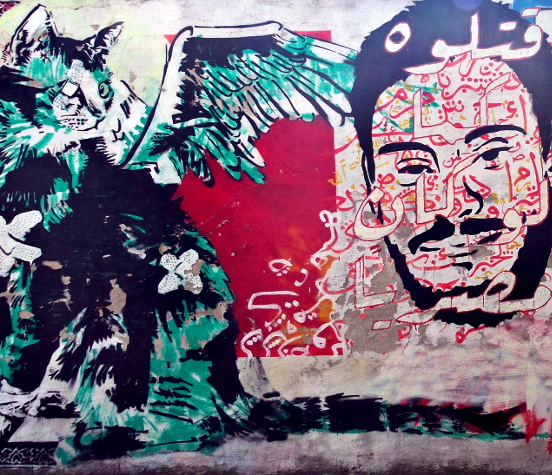
Photo credits: El Teneen
January 25, 2016, was not an ordinary day in Cairo. It marked the fifth anniversary of the 2011 Egyptian uprising, at a time when the country was still reeling from the convulsions unleashed by the Arab Spring. The city center was heavily patrolled to prevent people from organizing protests against the increasingly repressive government led by Abdel Fattah al-Sisi, or even from commemorating the revolution that had ended Hosni Mubarak’s 30-year rule. That evening, the Italian doctoral student Giulio Regeni entered a subway station in Cairo’s Dokki neighbourhood to meet friends at a birthday party—and disappeared.
Nine days later, his half-naked body was found by a bus driver, dumped in a ditch along the Cairo–Alexandria freeway, bearing horrific signs of torture. Initial police reports described his death as the result of a car accident or a botched burglary, and clumsy cover-ups were staged. But Regeni’s disfigured body bore the unmistakable hallmarks of an extrajudicial killing by state security. Autopsies revealed that he had been interrogated and tortured for up to seven days before being killed. His mother later said she could identify him only from “the tip of his nose.”
At the time of his death, Giulio Regeni was a young researcher at Cambridge University. He was in Cairo conducting fieldwork for a doctoral dissertation on independent labor unions, with a particular focus on street vendors. During his stay, Regeni was affiliated with The American University in Cairo (AUC), a prominent private institution through which he was able to establish contacts for his research. Fluent in Arabic, he mingled with street vendors in Cairo’s busy streets to observe their work and study their efforts at unionizing. His research topic was politically sensitive—labor unions had played a role in the 2011 uprising—but not, at the time, considered life-threatening. Prior to Regeni’s death, foreign researchers in Egypt had not been subjected to lethal violence by state security. But by 2016, Egypt was gripped by anti-foreign paranoia, fueled by government propaganda portraying the 2011 revolution as the product of a foreign conspiracy.
For nearly a decade, the Regeni family, Italian institutions, and a broad segment of Italian public opinion have fought an uphill battle to uncover the truth and hold those responsible accountable. After painstaking investigative work by Italian prosecutors—conducted amid sustained obstruction by Egyptian authorities—four agents of Egypt’s National Security Agency are now standing trial in Rome. They are accused of kidnapping and torturing Regeni to death. The trial, however, is proceeding in absentia, as the Egyptian government denies their involvement and refuses to disclose their whereabouts. The investigation has revealed that Regeni was under surveillance by the security apparatus from the moment he arrived in Egypt, and that the National Security Agency had built a network of informants monitoring his activities. Among them were a close friend, Noura Wahbe, a former AUC professor, and a labor union organizer, Muhammad Abdullah.
I worked at the American University in Cairo until recently, where I served as an assistant professor in the Journalism and Mass Communication Department. I have fond memories of my time at AUC, but my experience there was haunted by the murder of Giulio Regeni—a subject that was as distressing as it was dangerous to discuss, even privately, with friends and colleagues. My office was in the same building as Noura Wahbe’s. I contacted her several times seeking to discuss the case, but to no avail. Another AUC faculty member, Rabab El Mahdi, helped Regeni get in touch with the National Security Agency informant whose involvement ultimately led to his kidnapping. When I raised the subject of Regeni with colleagues, I was told to drop it: it would reopen painful memories and could endanger those who had known him.
This is what it means to live under a brutal military regime that does not respect human rights. You constantly fear that raising certain topics may cost you your job, your freedom, or even your life. Former and current AUC faculty members could provide crucial testimony in the Regeni trial, yet institutional reluctance has helped preserve impunity and emboldened a violent regime. According to the European Parliament, Regeni’s murder was not an isolated event but part of a broader context of torture, deaths in custody, and forced disappearances—abuses that surged after Abdel Fattah al-Sisi seized power in the 2013 coup.
The Regeni case is not only about Egypt. It exposes how Western higher education institutions operating abroad, along with strategic alliances, can enable repression while professing democratic values. The democratic erosion now troubling the United States was foreshadowed in Egypt, a key partner, where the rights of a young academic were brutally violated with total impunity, and where civic freedoms have been systematically dismantled, betraying the aspirations of the Arab Spring.
On the tenth anniversary of Giulio Regeni’s death, the American University in Cairo could take a crucial step by fully cooperating with Italian prosecutors and sharing all relevant information needed to bring those responsible to justice. Such an act would send a powerful signal that U.S.-accredited institutions of higher education still stand for democracy, liberal values, and the protection of human rights.
 Gabriele Cosentino